
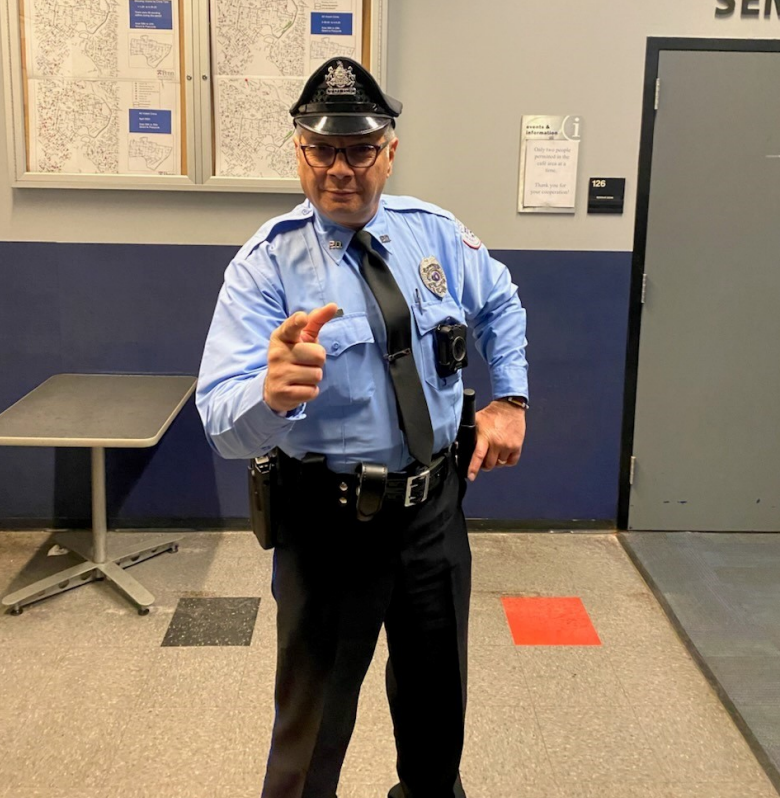
PHILADELPHIA — After retiring from a 30-year career with the Philadelphia Police Department, Gary Guaraldo wasn’t ready to slow down. After some time off, he took a job with the University of Pennsylvania Police, patrolling the area from 30th Street Station to 43rd Street. All went well when, without warning, everything changed.
Gary was on duty and walking with two colleagues when he suddenly fell. The other officers were a few steps ahead and only realized something was wrong when they turned around and found Gary on the ground.
To this day, no one knows why he fell.
Penn Medicine doctors ran extensive tests, including CT scans and heart monitoring, but found no evidence of a stroke, aneurysm or cardiac event. Regardless, his injuries were serious: Gary suffered a traumatic brain injury (TBI), including a severe concussion, brain bleed and fractured skull.
He has no memory of the fall, the ICU stay at Penn Presbyterian Medical Center or the early days of his hospitalization.
“I don’t remember any of it,” Gary said. “Not the fall. Not the ICU. Nothing.”
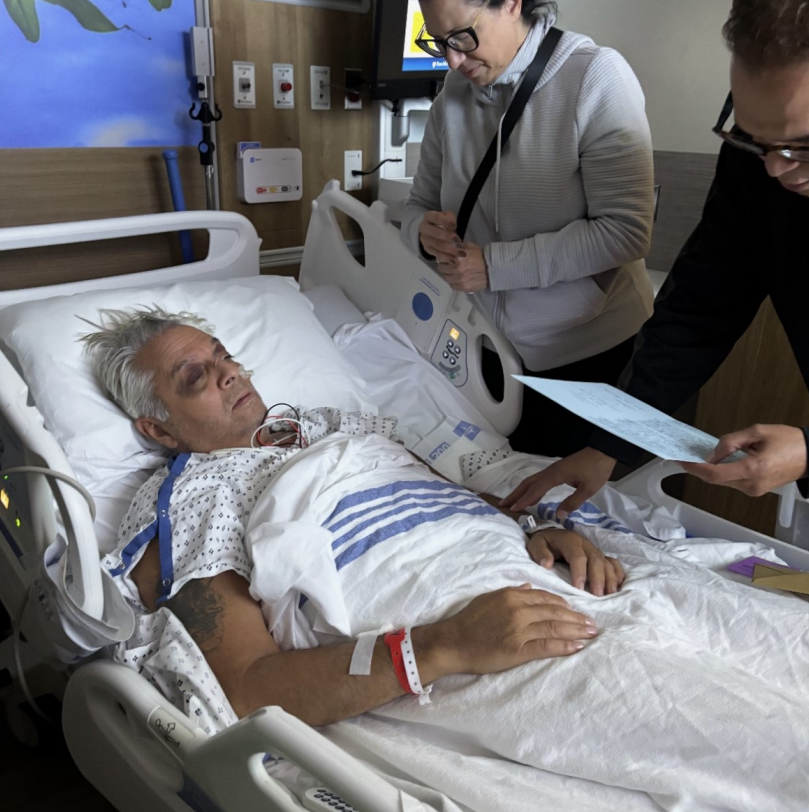
It wasn’t until he was transferred to Penn Medicine Rehabilitation, an inpatient rehabilitation unit of the Hospital of the University of Pennsylvania, that Gary’s memory slowly began to return. At the rehabilitation center on 1800 Lombard Street, Gary began intensive physical therapy, occupational therapy and speech therapy under the supervision of physical medicine and rehabilitation (PM&R) doctors and the care of nursing. As the days passed, Gary came to understand what happened to him and how blessed he was to be recovering.
One moment clearly stands out for Gary.
“My wife, Joanne, came to see me at the rehab hospital and she was crying. I asked her why the tears. She said, ‘I thought I was going to lose you,’” Gary said. “I responded with, ‘What are you talking about?’ That’s when she told me about the fall and the ICU.”
At first, Gary was eager to return to his old routine.
“I wanted to be normal and get going again,” he said. “But I couldn’t. I had to learn to slow down.”
After more than two weeks in inpatient rehabilitation at the 58-bed unit, Gary returned home. The early days back at home were difficult. He avoided phone calls and visitors because everyone wanted answers he didn’t have about the fall.
Over time, Gary has regained not only his strength and balance but his confidence to socialize and talk to friends and family. He visited his University of Pennsylvania workplace to reconnect with colleagues.
“I’ve come a long way,” Gary said. “Doing physical therapy at my age is tough, but I’m getting back to normal and I’ve learned to slow down. I used to do everything fast — walk fast, get out of the car fast, eat fast. Now I slow down so I don’t get dizzy and it’s helped.”
Joanne, who stayed by Gary every step of the way, made the decision to send him to Penn Medicine Rehabilitation, which is managed by GSPP Rehabilitation.
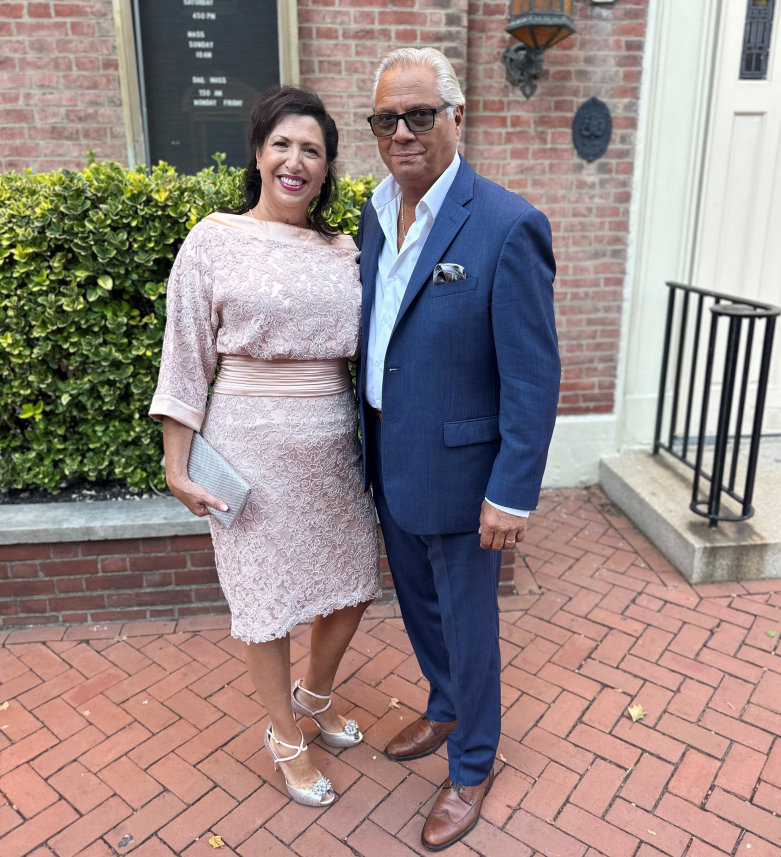
“We’re partial to Penn and go there for all our doctors,” she said. “When the hospital staff asked about my preference for inpatient rehab, I knew I wanted a Penn facility. A nurse recommended Penn Medicine Rehabilitation and I definitely made the right choice.”
Today, Gary credits both his wife and the care team for helping him through one of the most frightening chapters of his life.
“Everyone at Penn Medicine Rehabilitation was great,” he said. “They made you feel like family and couldn’t do enough for us during a scary time.”
For Gary and Joanne, the experience has been a powerful reminder that recovery from a traumatic brain injury takes time and the support of the right team of caring experts.